

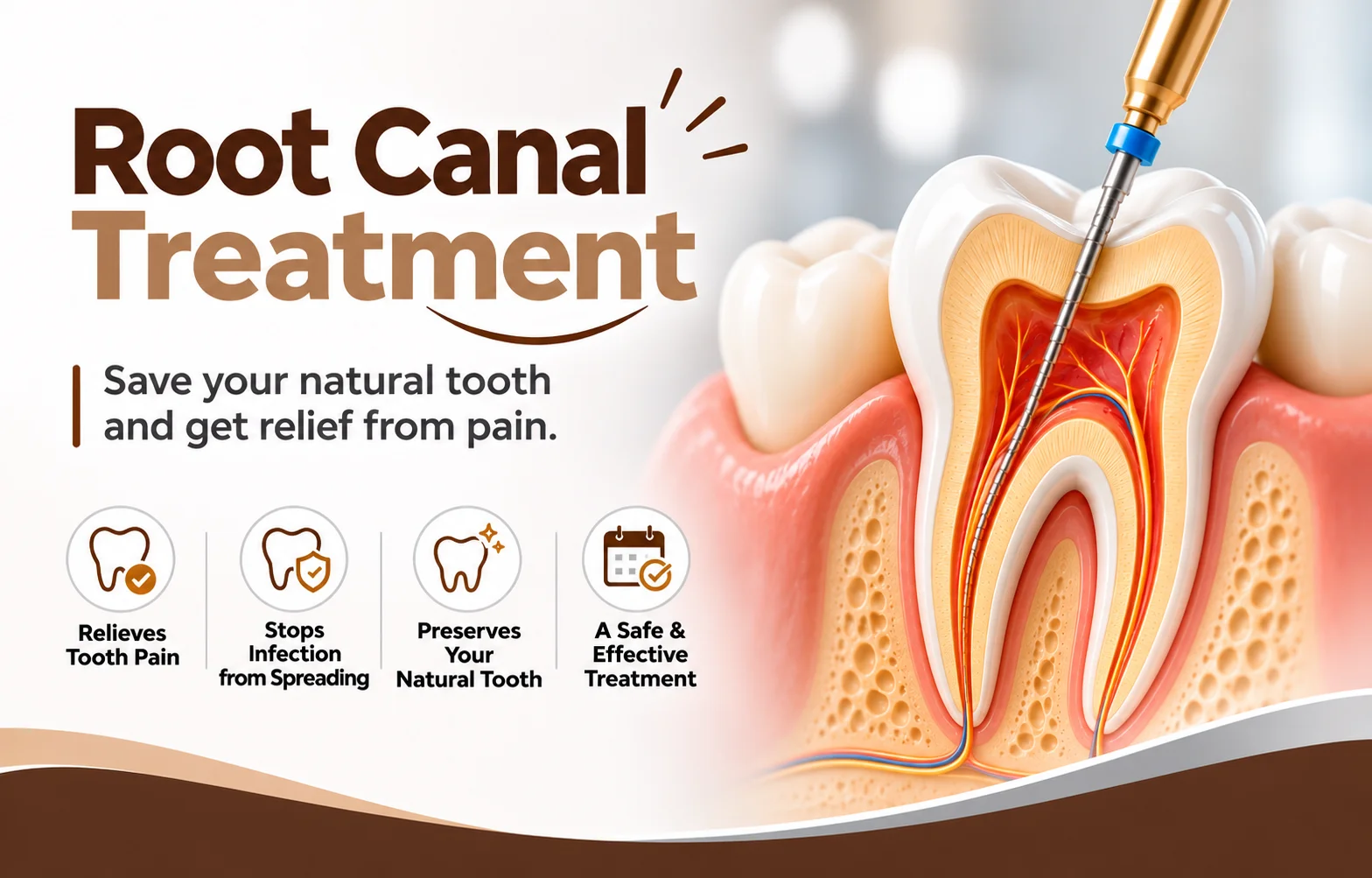
Few words make people as nervous in a dental chair as “root canal”. Most of that fear comes from old stories. Root canal treatment today is numbed properly and usually finished in one to three visits.
This guide explains what happens during root canal treatment, why a cap is usually needed afterwards, and what recovery feels like.
What is a root canal, in simple words?
Inside every tooth is a soft core called the pulp. It holds the tooth’s nerve and blood vessels and runs down through thin channels in the roots, the “root canals”. When deep decay, a crack or an old filling lets bacteria reach the pulp, it becomes inflamed or infected.
Root canal treatment removes the infected pulp, cleans and disinfects the canals, and seals them. You keep your natural tooth instead of having it pulled out.
Why do you need a cap after a root canal?
Many patients want to skip this step, but it often decides whether the tooth survives. A tooth that needed a root canal has usually already lost a lot of its structure to decay or old fillings. Once the pulp is removed, the tooth also becomes drier and more brittle over time. Without a crown, a root-canal-treated molar can crack, sometimes below the gum line, and then it may have to be removed.
A crown holds the tooth together. It can be made in metal-ceramic, zirconia or full ceramic. Front teeth with little damage sometimes need only a filling, but most molars and premolars need a cap. You can read more about root canal treatment on our endodontics page.
What happens during root canal treatment?
- Examination and X-ray – Your dentist checks the tooth, tests it and takes an X-ray to see how far the infection has spread and how many canals the tooth has.
- Numbing – Local anaesthesia is given so the tooth and gum are completely numb. You’ll feel pressure and vibration, not sharp pain.
- Cleaning the canals – A small opening is made in the top of the tooth. The infected pulp is removed and the canals are shaped and washed with disinfecting solutions.
- Filling and sealing – The clean canals are filled with a rubber-like material called gutta-percha and sealed. A temporary filling closes the opening.
- The cap (crown) – Once the tooth has settled, a crown is made and fitted over it.
How many visits does a root canal take?
It depends on the tooth and the infection. A front tooth with one canal and no swelling can often be done in a single sitting. A back molar with three or four canals, or a tooth with an active abscess, usually needs two or three visits. Add one or two more visits for the crown
Why do you need a cap after a root canal?
Many patients want to skip this step, but it often decides whether the tooth survives. A tooth that needed a root canal has usually already lost a lot of its structure to decay or old fillings. Once the pulp is removed, the tooth also becomes drier and more brittle over time. Without a crown, a root-canal-treated molar can crack, sometimes below the gum line, and then it may have to be removed.
A crown holds the tooth together. It can be made in metal-ceramic, zirconia or full ceramic. Front teeth with little damage sometimes need only a filling, but most molars and premolars need a cap. You can read more about root canal treatment on our endodontics page.
Does root canal treatment hurt?
During the treatment, it shouldn’t. Modern anaesthesia works well, and your dentist will check that the tooth is fully numb before starting. After the treatment, it’s normal for the tooth to feel tender for two or three days, especially when you bite. Severe pain, swelling that increases, or a fever is not normal, and you should call the clinic.
If you’re very anxious about dental treatment, ask about our anxious patients.
Recovery tips after a root canal
Don’t chew on the treated side until the numbness wears off.
Avoid hard or sticky food on that tooth until the crown is fitted.
Brush and floss as usual, and take medicines exactly as prescribed.
Don’t delay the crown appointment. A tooth left without a cap for months is at real risk of breaking
About Megadent Advanced Dental Care, Kondapur Megadent
Advanced Dental Care is a dental clinic in Raja Rajeshwari Nagar, Kondapur, beside Swiss Castle, with a team led by Dr. Ramesh Tirnati, a prosthodontist with 20 years of experience. Root canal treatment at the clinic starts with an X-ray and a clear explanation of how many visits your tooth will need, the crown options and the cost. The clinic is open every day from 10:00 am to 8:30 pm. Call 093424 74849 to book a check-up
Conclusion:
Root canal treatment is a way to save a tooth, not something to fear. It removes the infection, stops the pain and lets you keep your natural tooth, and the cap that follows protects it for years. If a tooth aches at night or stays sensitive to hot and cold, get it checked early. A smaller problem is simpler to treat.
Frequently Asked Questions (FAQs)
1. Can I go to work after a root canal?
Yes. Most people go back to work or college the same day. Your mouth may stay numb for two to three hours, so eat only after the numbness wears off.
2. Is it better to remove the tooth instead of doing a root canal?
Saving your natural tooth is almost always better if it can be saved. Removing it leaves a gap that usually needs an implant or bridge later, which takes more time and costs more. If the tooth is too damaged to save, your dentist will tell you honestly.
3. Can antibiotics cure a tooth infection without a root canal?
No. Antibiotics can reduce swelling for a while, but they can’t reach and clean the infected pulp inside the tooth. The infection usually comes back once the course ends.
4. How long does a root-canal-treated tooth last?
With a good crown, regular check-ups and good brushing, a root-canal-treated tooth can last for many years, often for life.
5. Why does my tooth still hurt a few days after the root canal?
Some tenderness for a few days is normal while the tissues around the root settle. If the pain gets worse after three or four days, or you notice swelling, contact the clinic