

Doctor, won’t cleaning make my teeth loose?
We hear this almost every week. Others worry it wears away enamel. So is teeth cleaning good or bad? Done by a dentist, at the right interval, it’s one of the simplest things you can do to protect your teeth and gums. Here’s what actually happens and how often you need it
Why your teeth need professional cleaning at all
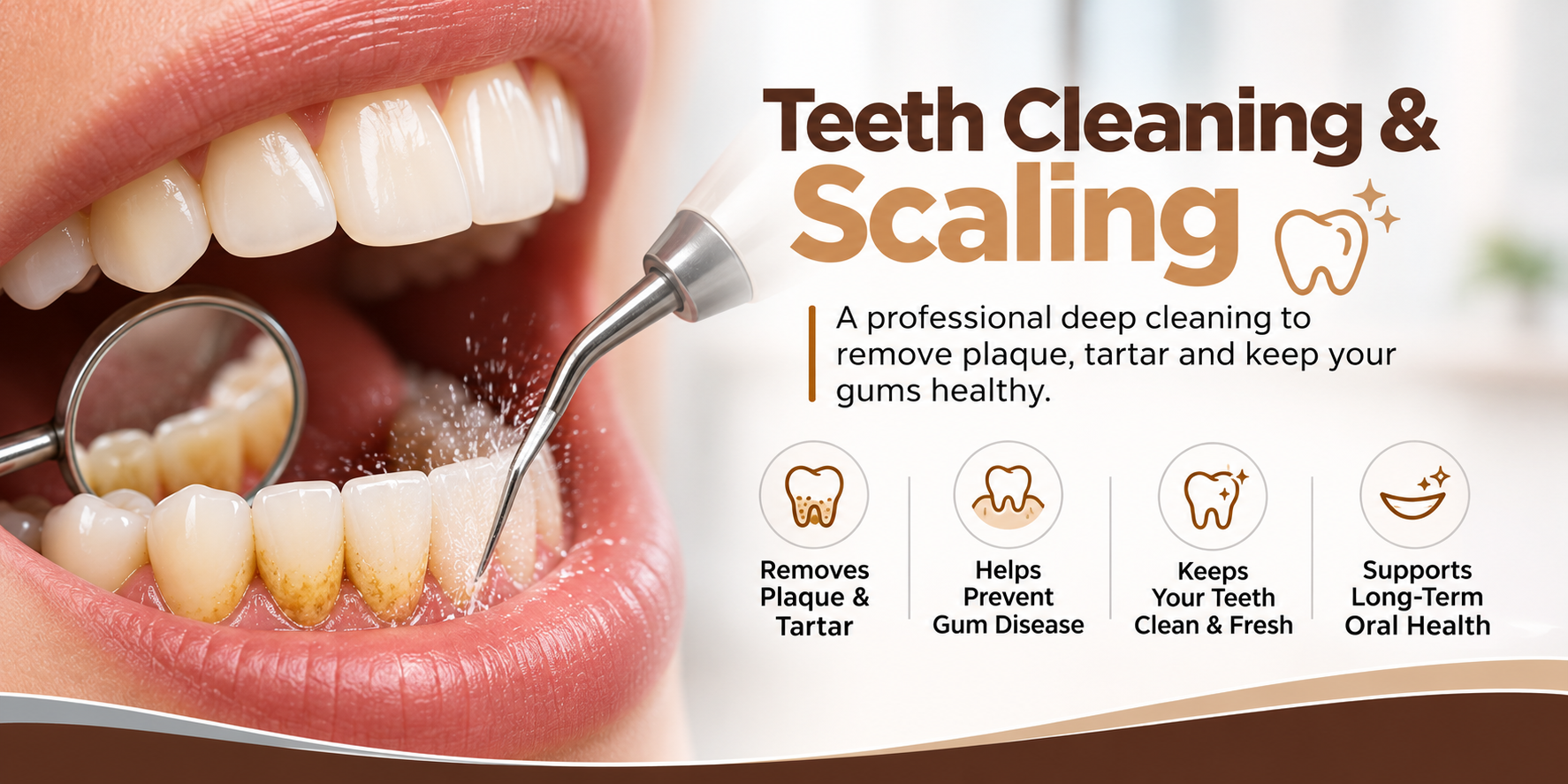
Every day, a sticky film of bacteria called plaque forms on your teeth. Brushing and flossing remove most of it. But in places the brush misses, like behind the lower front teeth or along the gum line of the back teeth, plaque hardens within a few days into tartar.
Tartar is rough and yellow or brown, and no toothbrush can remove it. Bacteria keep building up on it, and your gums react. They turn red, swell and start to bleed when you brush. That’s gingivitis, the earliest stage of gum disease. Left alone, it can move deeper, damage the bone that holds your teeth and eventually make teeth loose. Professional teeth cleaning and scaling removes that tartar so your gums can heal.
What happens during teeth cleaning and scaling?
1. Check-up: your dentist looks at your gums, checks for bleeding and pockets, and spots any cavities.
2. Scaling: an ultrasonic scaler uses gentle vibration and a spray of water to break tartar off the teeth and just below the gum line.
3. Polishing: a soft rubber cup and polishing paste smooth the tooth surface and remove surface stains from tea, coffee and smoking.
4. Advice: your dentist shows you the spots you miss while brushing.
A routine cleaning usually takes 30 to 45 minutes.
5 myths about teeth cleaning, and the truth
Myth 1: “Scaling makes teeth loose.” Scaling doesn’t loosen teeth. What sometimes happens is that heavy tartar was acting like a bridge between teeth that had already lost bone support from gum disease. Once the tartar is removed, you notice the gaps and the looseness that were already there. The real cause is the gum disease, and cleaning is the first step in treating it.
Myth 2: “Cleaning wears away the enamel.” Enamel is the hardest substance in the body. A scaler is designed to remove tartar, which is much softer, and doesn’t scrape away healthy enamel when used correctly by a trained dentist.
Myth 3: “My teeth became sensitive after scaling, so it damaged them.” Mild sensitivity for a few days is common, especially if there was a lot of tartar. It usually settles within a week. Our guide on tooth sensitivity causes and treatment explains more.
Myth 4: “If my teeth don’t hurt, I don’t need cleaning.” Gum disease is usually painless in the early stages. Bleeding while brushing, bad breath or swollen gums are the warning signs, not pain. By the time it hurts, the problem is often advanced.
Myth 5: “Cleaning will whiten my teeth.” Cleaning removes surface stains, so teeth often look brighter. It doesn’t change the natural shade of your teeth. That needs teeth whitening, which is a separate treatment
Bleeding gums: the sign you shouldn’t ignore
Many people see a little blood while brushing and assume they’re brushing too hard. Healthy gums usually don’t bleed. Bleeding is usually a sign of inflamed gums from plaque and tartar. A professional cleaning, followed by good brushing and flossing at home, often stops the bleeding within one to two weeks.
If bleeding continues after cleaning, or your gums are pulling back from your teeth, read about gum recession causes and prevention and ask your dentist about gum treatment.
How often should you get your teeth cleaned?
For most adults, every six months is right. Some people need it more often, every three to four months
Smokers and people who chew tobacco or gutka
People with diabetes
People wearing braces or aligners
Anyone who has had gum disease before
Pregnant women, as hormonal changes make gums bleed more easily
If you have deeper gum pockets, your dentist may suggest a deep cleaning (root planning), which cleans the root surfaces below the gum line, sometimes under local anesthesia.
Looking after your teeth between cleanings
Brush twice a day for two minutes with a soft brush and fluoride toothpaste.
Clean between your teeth once a day with floss or interdental brushes.
Brush along the gum line at a gentle angle, not just the chewing surfaces.
About Megadent Advanced Dental Care, Kondapur
Megadent Advanced Dental Care is a dental clinic in Raja Rajeshwari Nagar, Kondapur, beside Swiss Castle, offering general, cosmetic and restorative dentistry for adults and children. A routine check-up and cleaning at the clinic includes a gum examination, ultrasonic scaling, polishing and personal brushing advice, and your dentist explains what your teeth need and the cost before starting. The team is led by Dr. Ramesh Tirnati, a prosthodontist with 20 years of experience. The clinic is open every day from 10:00 am to 8:30 pm. Call 09342474849 or visit our teeth cleaning page to book.
Conclusion:
Teeth cleaning is good for your teeth, not bad. It removes the tartar your brush can’t reach, lets bleeding gums heal and catches problems before they start to hurt. Mild sensitivity afterwards is normal and short-lived. A cleaning every six months, along with good brushing and flossing at home, is one of the simplest ways to keep your teeth and gums healthy
Frequently Asked Questions (FAQs)
1. Is teeth cleaning painful?
For most people, no. You’ll feel vibration and water spray. If your gums are very inflamed or you have sensitive teeth, the dentist can use a numbing gel or local anaesthesia.
2. How long does teeth cleaning take?
A routine cleaning takes about 30 to 45 minutes. Heavy tartar or deep cleaning may need two sittings. Can I eat after scaling? Yes, you can eat after about 30 minutes. Avoid very hot, very cold or strongly coloured food and drinks for the rest of the day if your teeth feel sensitive.
3. Is scaling safe during pregnancy?
Yes, and it’s often recommended, because pregnancy makes gums more likely to bleed. The second trimester is usually the most comfortable time.
4. What is the difference between teeth cleaning and teeth whitening?
Cleaning removes plaque, tartar and surface stains to keep your gums healthy. Whitening uses a bleaching gel to lighten the natural colour of your teeth